Image model news
MiniMax H3 Image: open weights, 4K output and 16 reference images
MiniMax released H3 Image with public weights and an API in November 2026. The 33.1B model does 4K generation and editing with up to 16 references, under a community license with a $1M revenue cap.
TL;DRWhat you need to know
- Open weights, not open source. MiniMax published the H3 Image checkpoint under a community license with revenue and territory limits.
- One model for generation and editing. A 33.1B diffusion transformer handles text-to-image and edits with up to 16 reference images.
- 4K output. The API has a 4K area level at 4096 by 4096, and the model card lists sizes up to 6272 by 2688.
- Six sampling steps. No classifier-free guidance, which keeps the number of forward passes low.
- No published benchmark. MiniMax calls it the strongest open image model, but the model card has no numeric benchmark table.
MiniMax opened the H3 Image weights and API in November 2026. The Hugging Face repository was last updated on November 10, and launch coverage appeared the next day. The model is a 33.1B-parameter diffusion transformer that generates images from text and edits existing images with up to 16 references. Typical output is about 16 megapixels, with 4096 by 4096 for square images and 6272 by 2688 at 21:9. The release puts a frontier-size image model in the open-weights tier, under a license that is narrower than the phrase "open source" usually suggests.
What did MiniMax release?
The release includes two checkpoints and a hosted API. MiniMax-H3-Image is the generation and editing model. MiniMax-H3-Image-PE is a 27B prompt-expansion model derived from Qwen3.8-27B under Apache 2.0; it rewrites short requests into longer descriptions and suggests an aspect ratio.
| Item | Detail |
|---|---|
| Model | MiniMax-H3-Image, 33.1B diffusion transformer, one checkpoint for text-to-image and editing |
| Weights | BF16, about 68.65 GB, on Hugging Face |
| Text encoder | Qwen3-VL variant inherited from MiniMax-H3, about 66.7 GB |
| Output | About 16 MP at common aspect ratios, from 4096 by 4096 (1:1) to 6272 by 2688 (21:9); effective range about 4 to 20 MP |
| References | 1 to 16 images for edits; upload order sets Picture 1 through Picture 16 |
| Sampling | 6 steps, guidance fixed at 1 |
| Prompt | API accepts up to 32,000 characters; the base model truncates at 4,096 tokens; PE model optional |
| API | /v1/images/generations, /v1/images/edits, /v1/h3_image_context_ir |
| License | MiniMax-H3-Image Community License Agreement |
The image model keeps the H3 text encoder and drops the audio branch from H3-Base. The diffusion transformer has 50 layers, hidden size 5,376, 56 heads and a 3D multimodal RoPE. A 2 by 2 latent patch turns each 32 by 32 pixel block into one token. Those details explain the hardware bill: a local install needs the 68.65 GB transformer and the 66.7 GB encoder before you count activations.
The API separates text-to-image, edits and prompt enhancement. A MiniMax-H3-Image-Highspeed variant uses the same parameters and limits. The report from Xinzhiyuan says the model is also available in MiniMax Code, the MiniMax open platform and Hailuo AI.
Why does 4K output matter?
Most image models output 1 to 4 megapixels. At that size a poster or a full-screen web asset needs upscaling, and a crop for a detail shot runs out of pixels. A 4K frame gives a designer room to crop, retouch and reuse one image at several sizes.
Speed decides whether that resolution is usable. The source report says H3 Image takes 10 to 20 seconds for a 4K image. Current models mostly run in minutes, with the fastest around 50 seconds. MiniMax's model card does not publish latency figures, so treat the range as a tester observation. What the card does confirm is the design behind it: six sampling steps and no classifier-free guidance, which cuts the number of forward passes per image.
The practical effect shows up over a session: more renders per hour. A designer can try a composition, adjust the lighting, and try again while the idea is still fresh.
What did early testers post?
MiniMax gave access to a group of creators before the public release. Their posts are demos, not benchmarks, but they show which tasks the model handles without obvious failure.
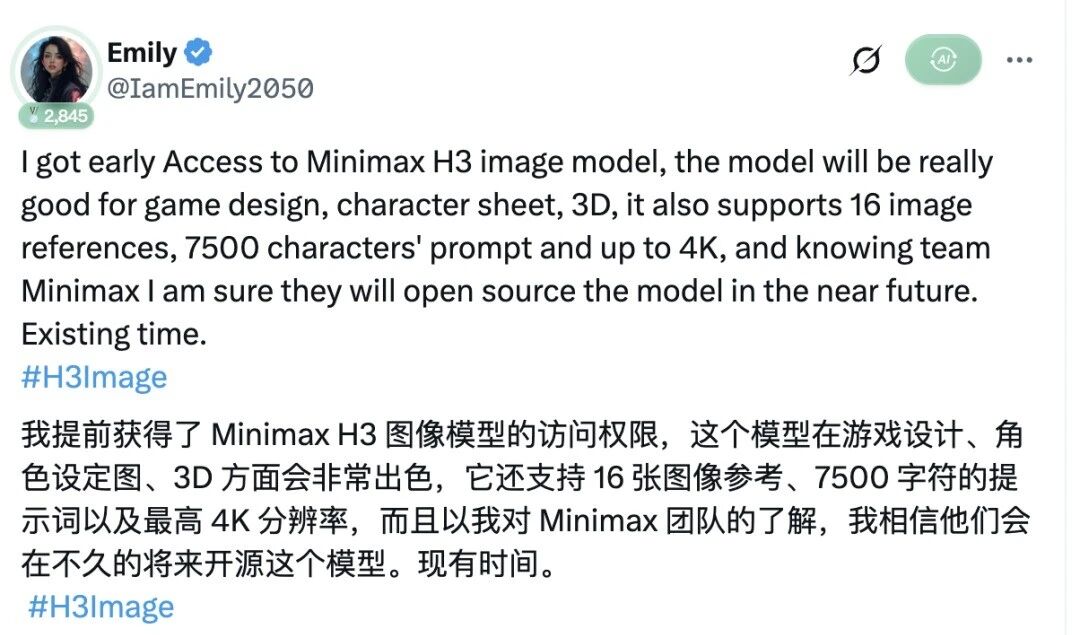
Emily, an early tester, listed three limits: 16 reference images, prompts up to 7,500 characters and 4K output. She also predicted that MiniMax would open the weights. The model card confirms the 16-image limit. The API accepts prompts up to 32,000 characters, though the base model truncates at 4,096 tokens unless prompt enhancement runs.
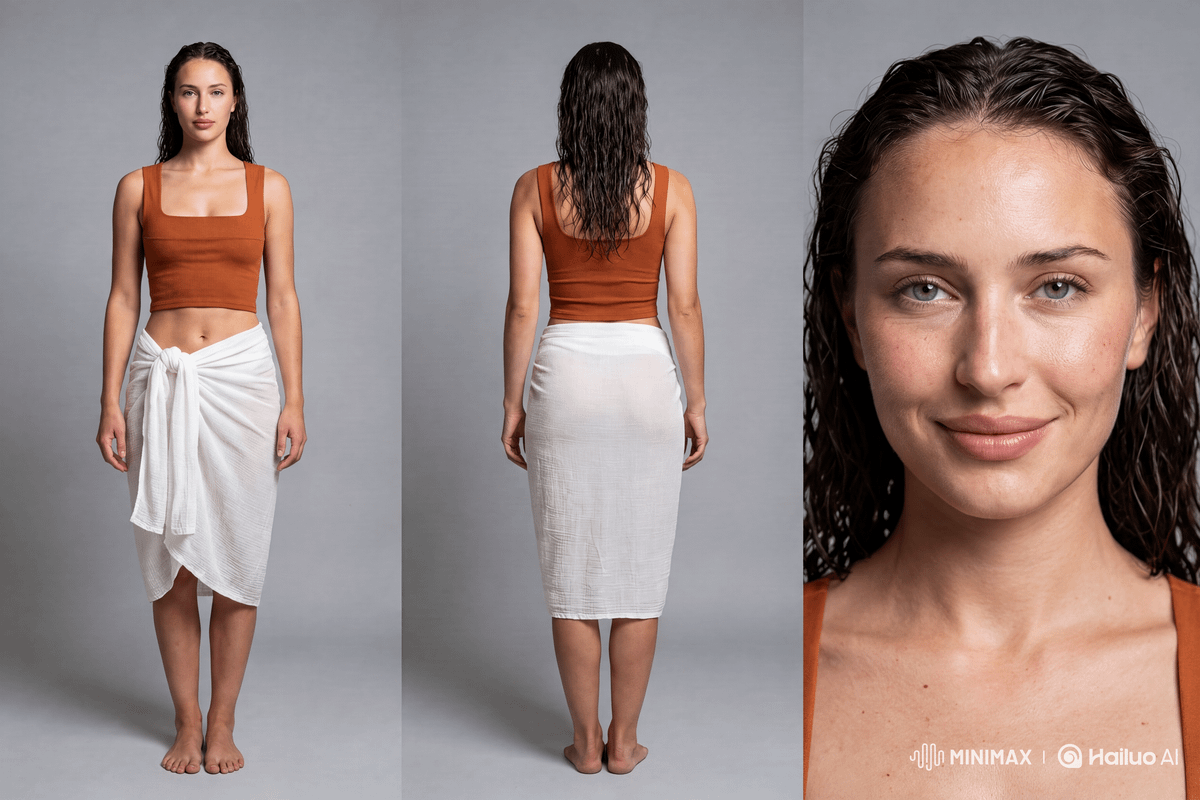
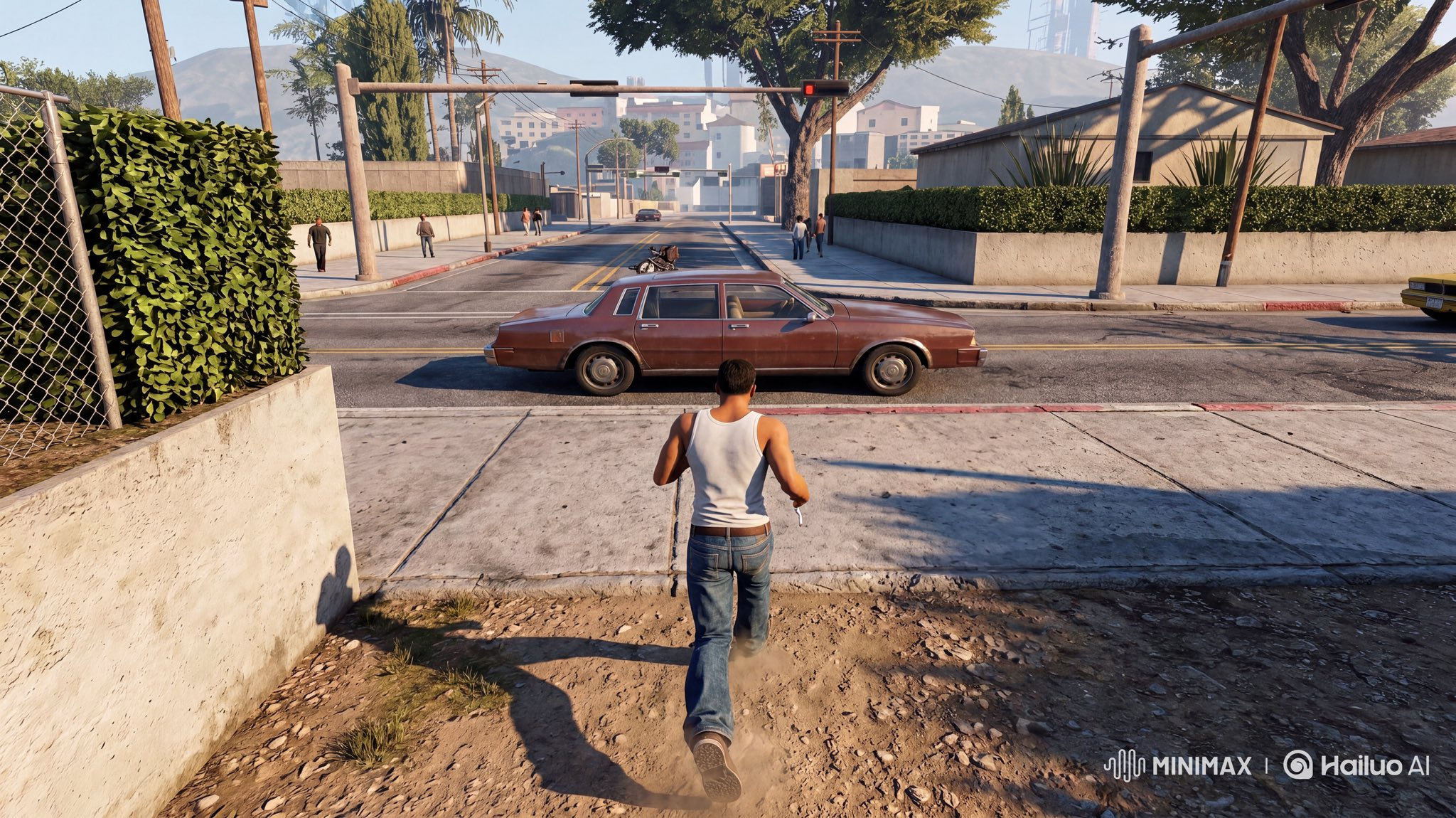
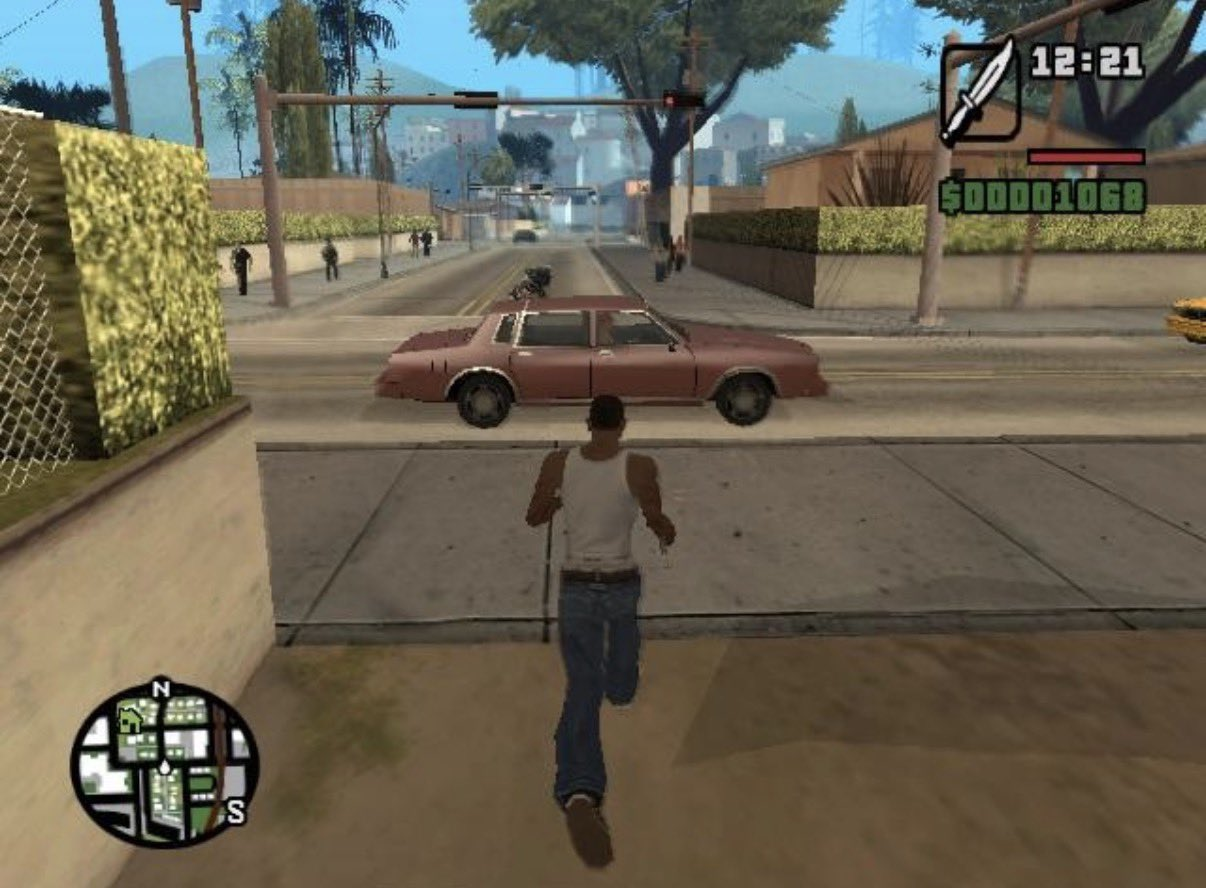
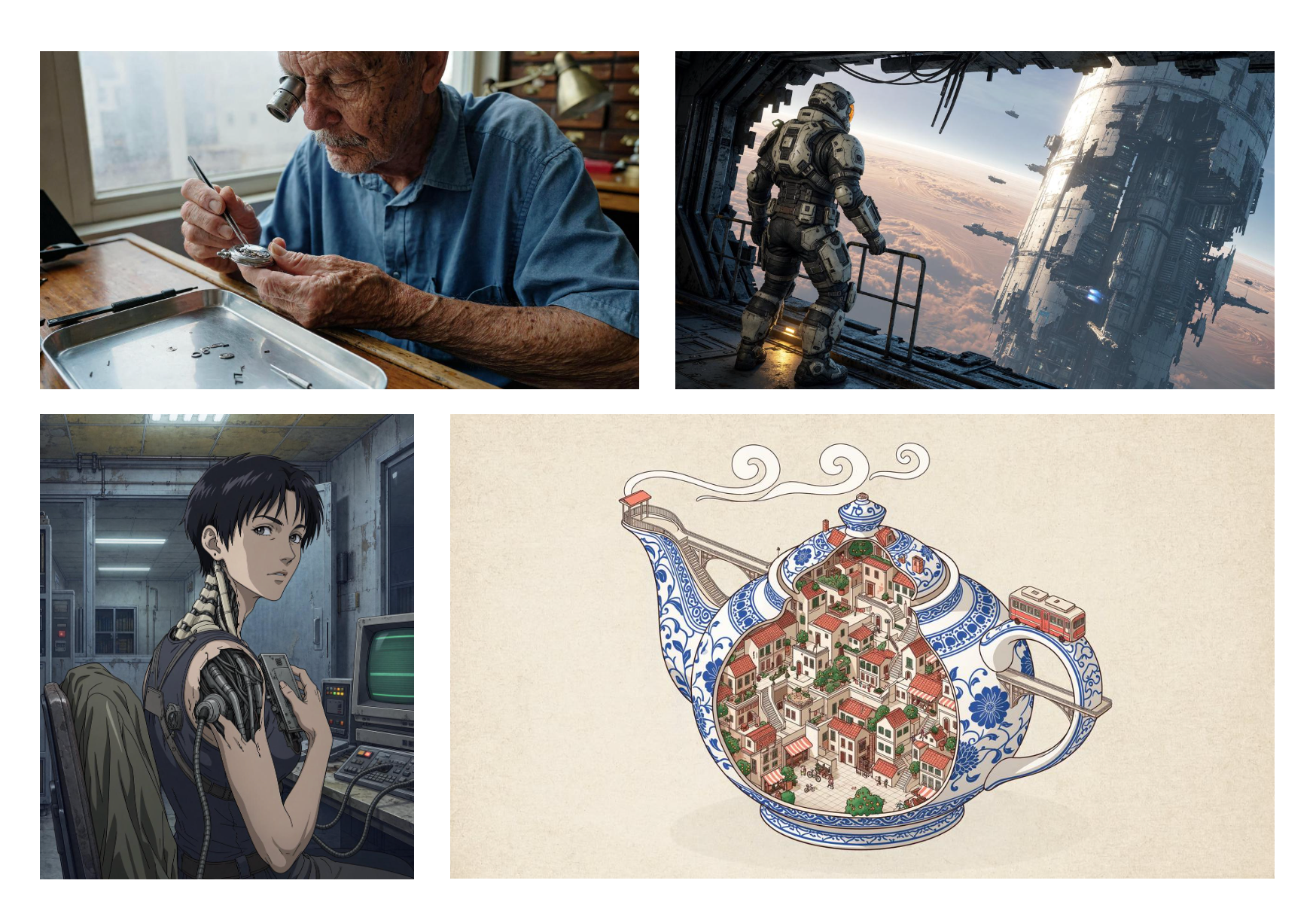
Muhammad Ayan turned one portrait into a character sheet with front, back and face close-ups at 4K. His point was skin: pores, freckles, fine hair. Papillon took an old Grand Theft Auto: San Andreas screenshot and asked for a current-generation version of the same scene. DrSadek ran four styles, including documentary photography and cyberpunk animation, and asked followers to vote. Israa Ali tested 3A game assets and 3D scenes and wrote that "GPT is cooked."
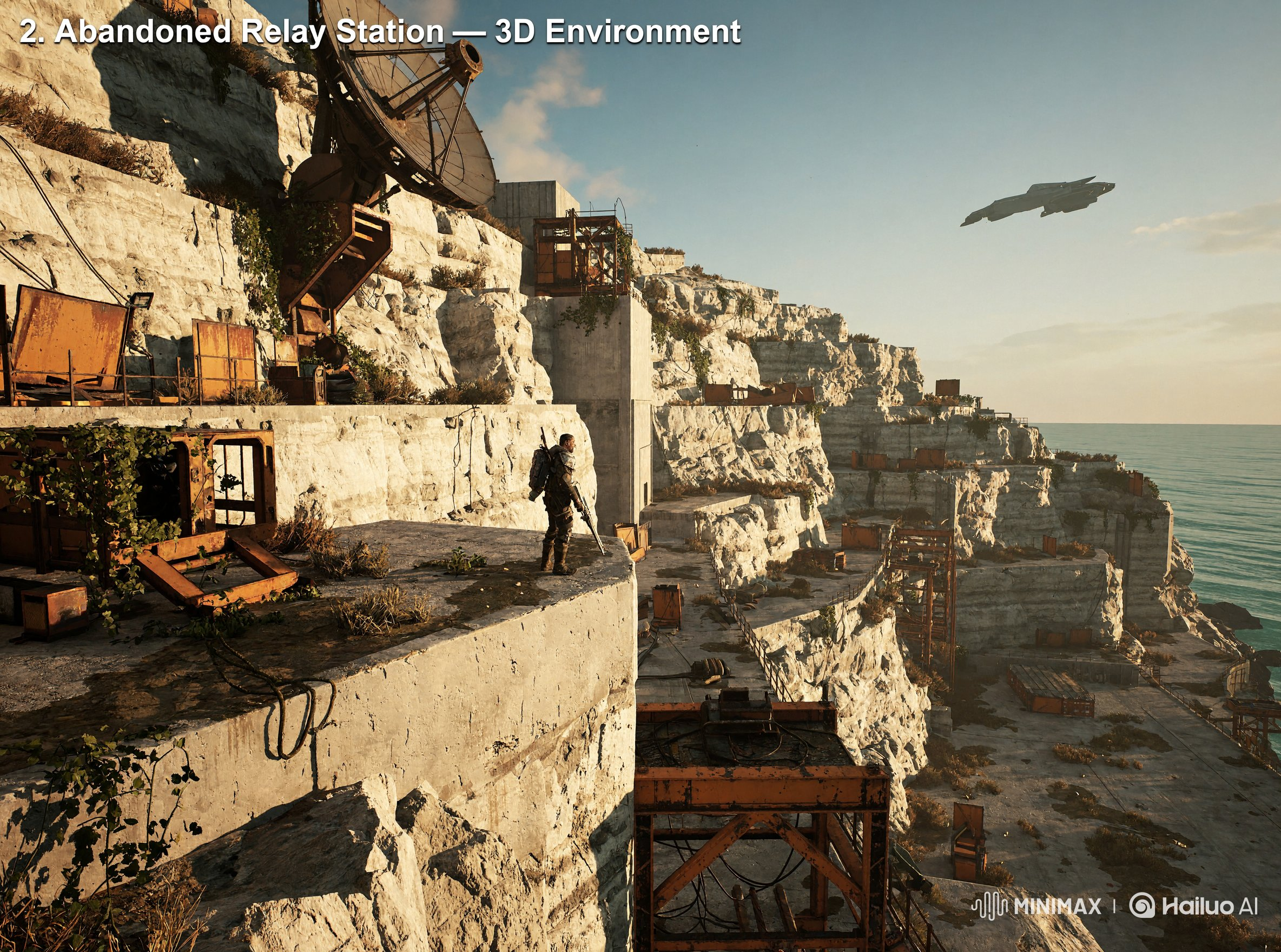
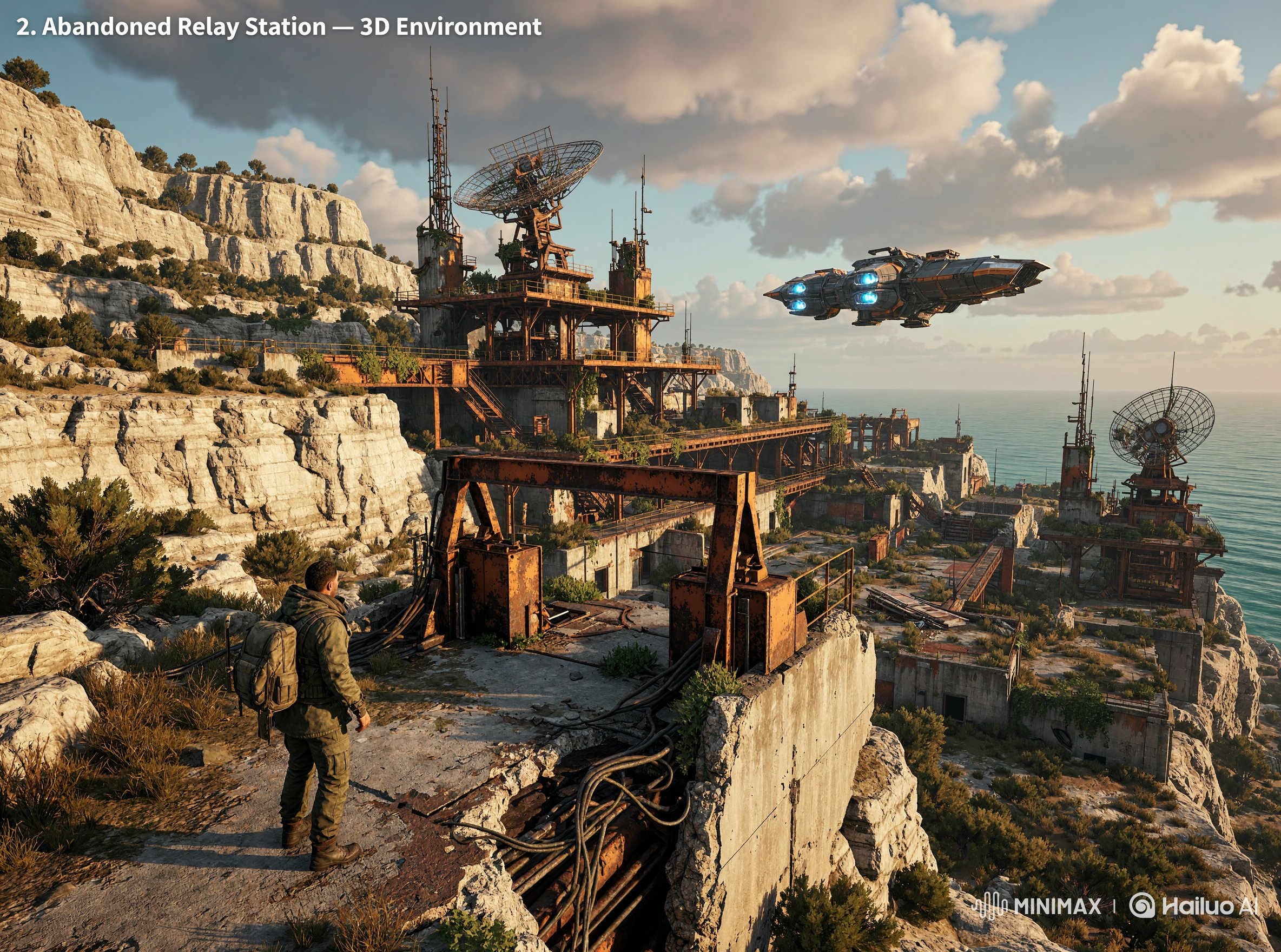
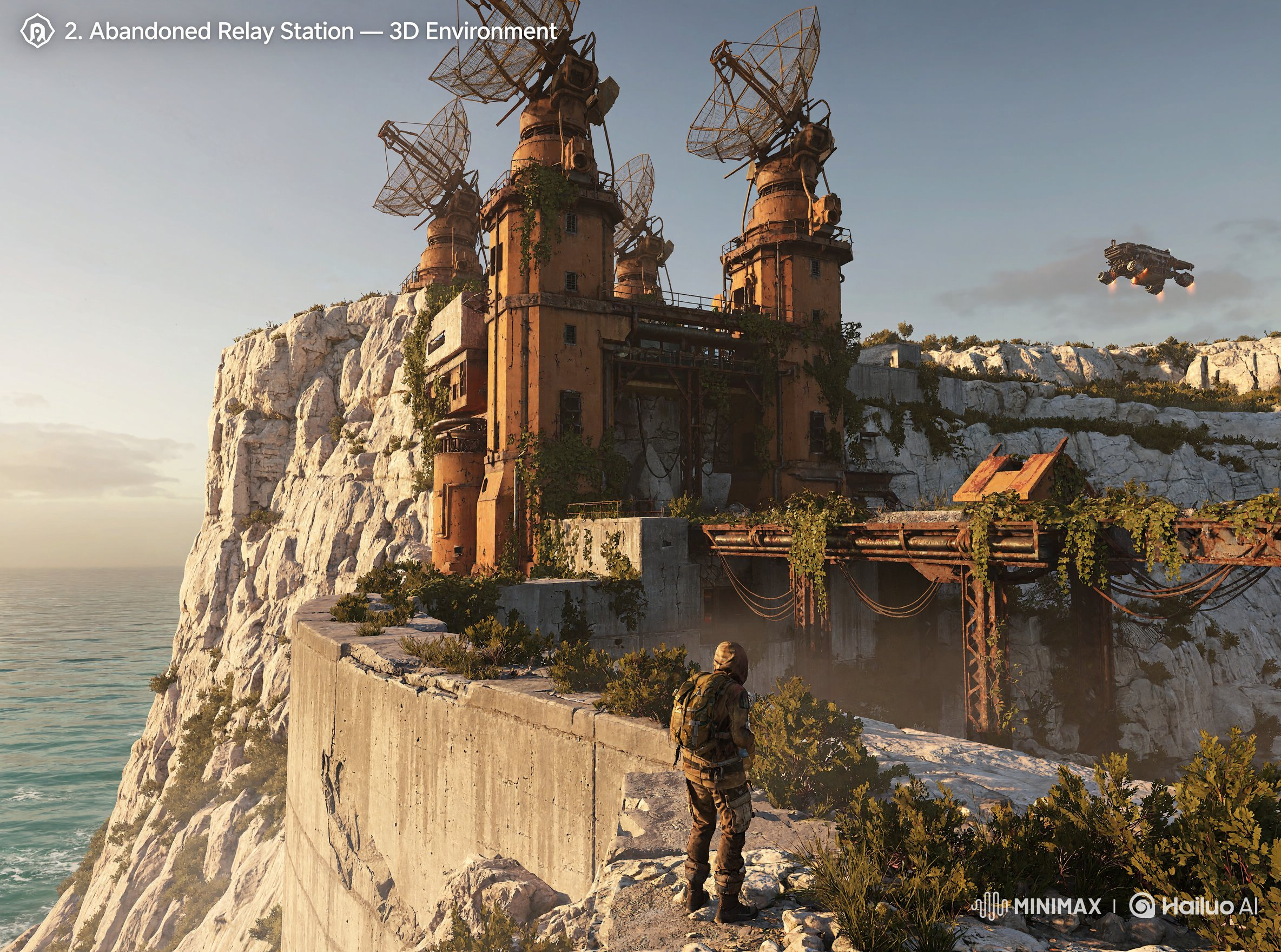
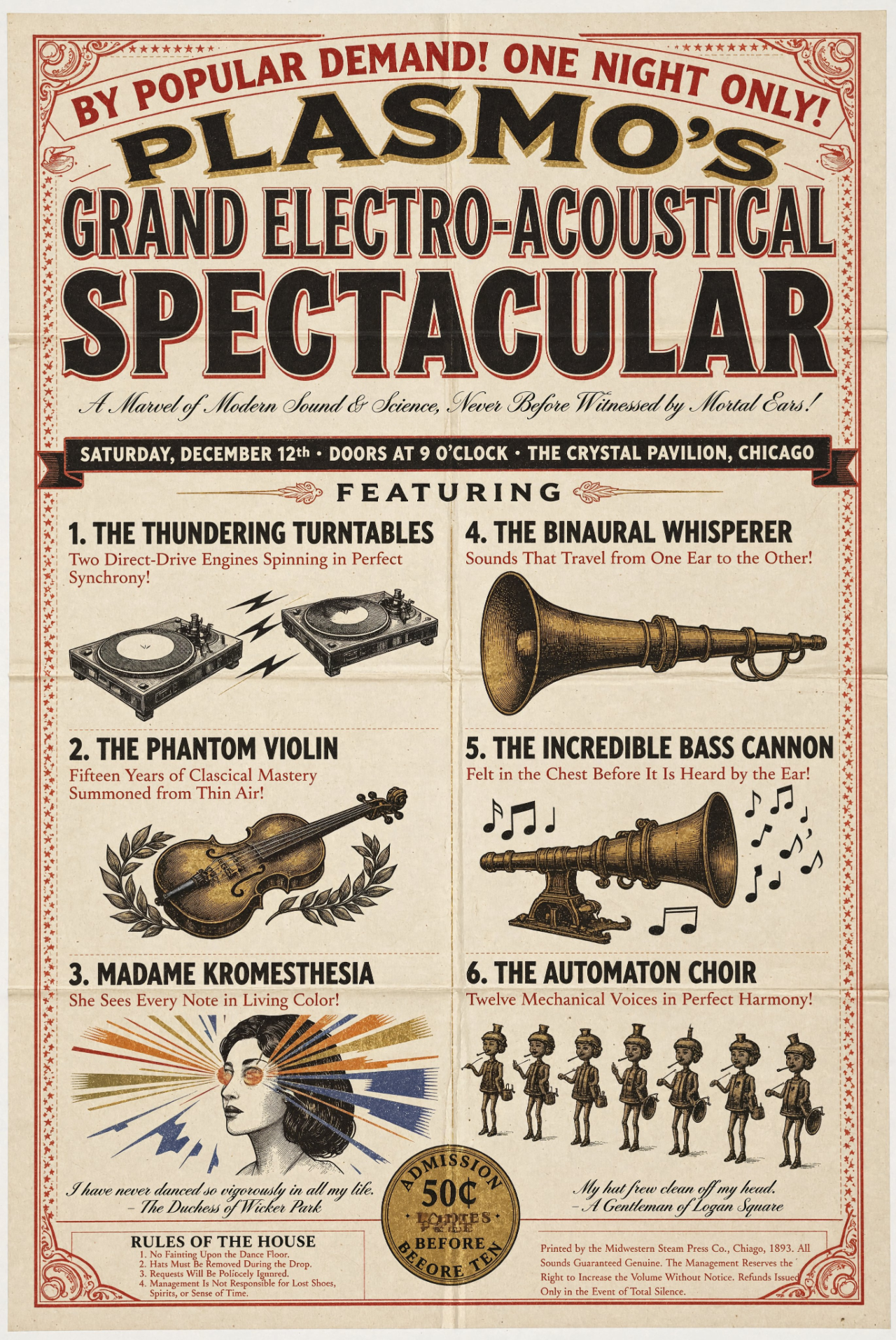
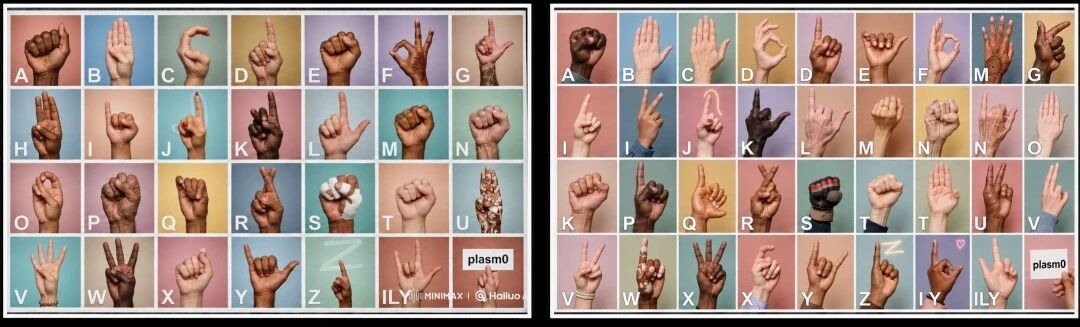
plasm0 tested large-type posters and American Sign Language hand signs. He said big lettering held up and small text sometimes failed. On ASL he called the output "much better than Moss." The source report cites a comparison that put H3 Image at 48.1% accuracy on ASL signs against 20.0% for Moss. We could not find that comparison in MiniMax's own materials, so the number is best read as a third-party test result.
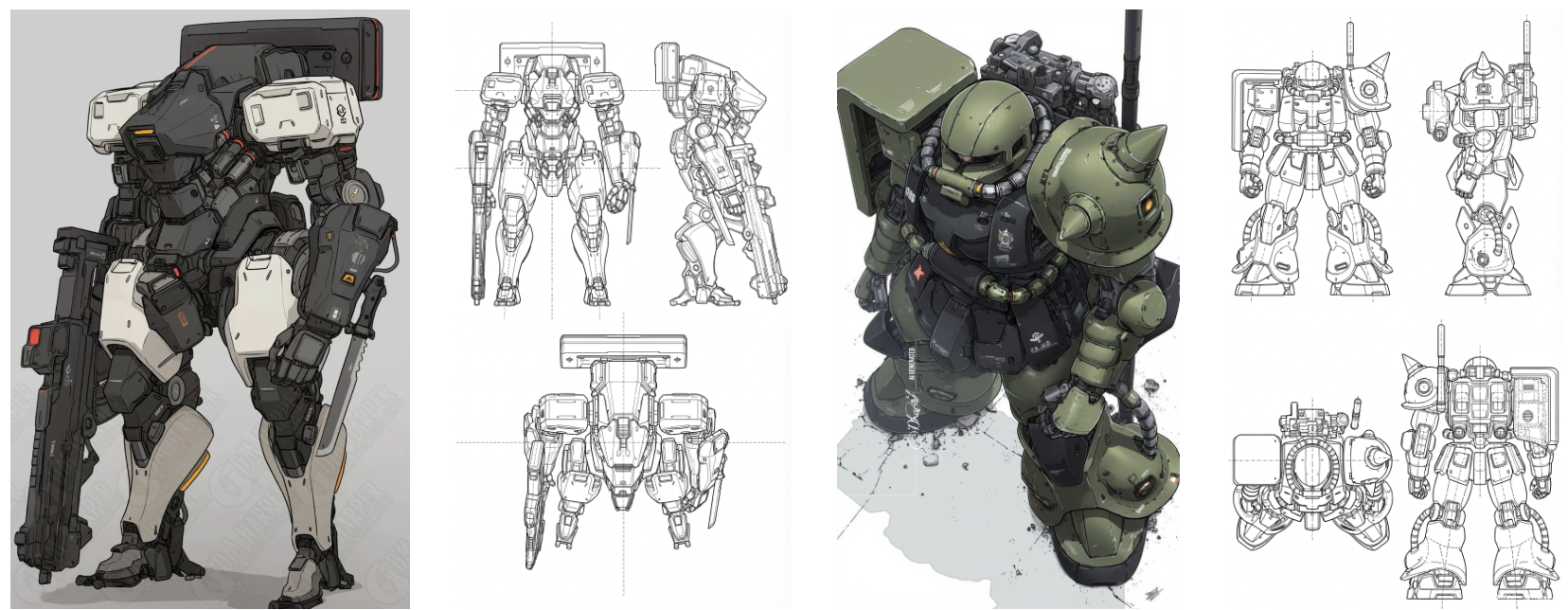
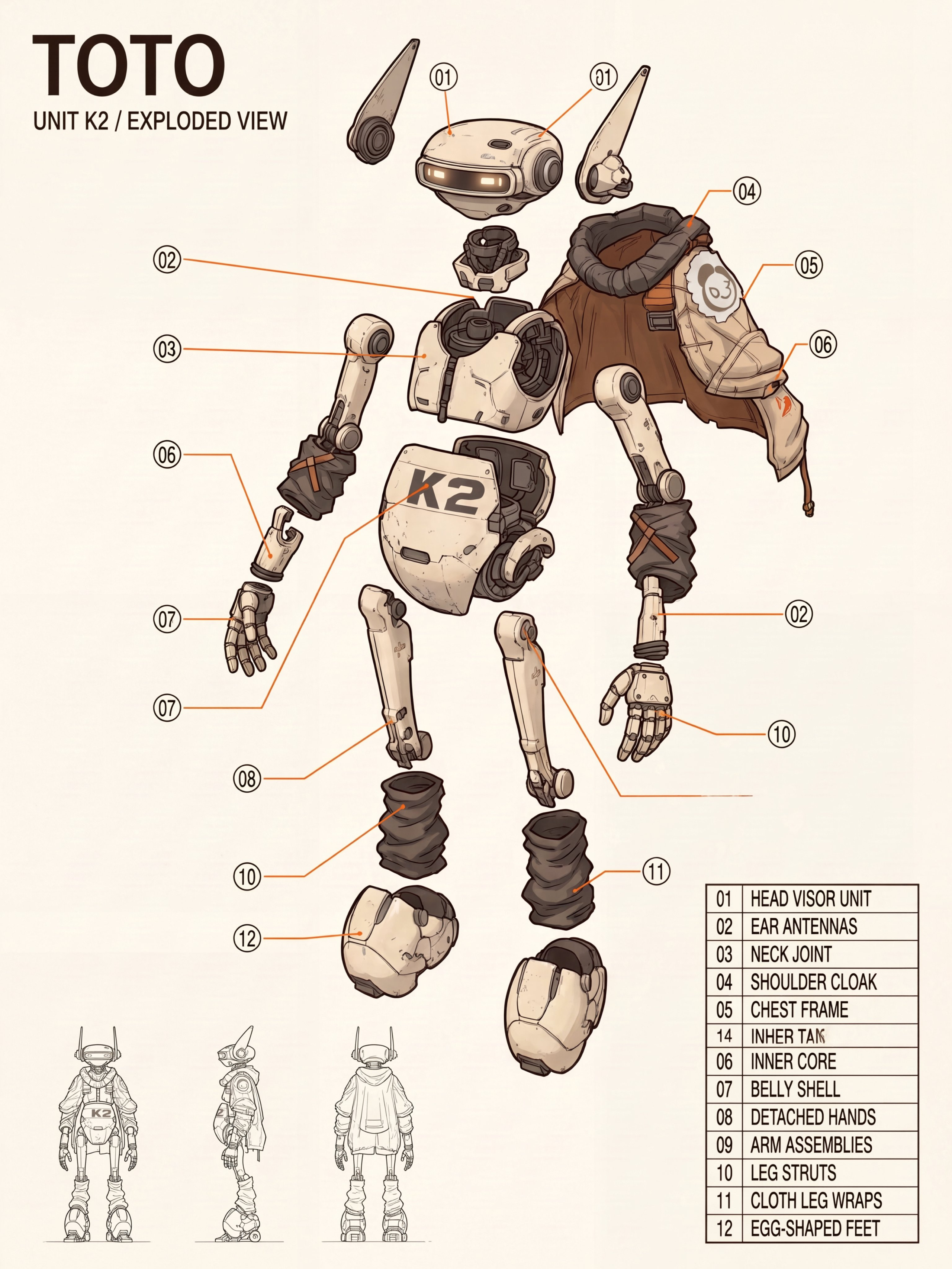
Other testers, including Ankit Patel and studio_oneroom, posted CAD-style and exploded mechanical views. These are common failure cases for image models: the parts have to sit in the right order, the labels have to point at the right object, and the geometry has to survive the drawing style.
Where image models usually fail
An image can look impressive and still be wrong. The failures cluster around text, hands, spatial relationships and technical drawings. A scene with a mislabeled part, a reversed hand or a bounding box that floats beside the object it should enclose is not usable for production, even if the lighting is beautiful.
The source report draws a line between art models such as Midjourney, which handle light and texture but struggle with long text and spatial logic, and language models such as Claude, which reason clearly but do not produce photographic images. MiniMax's pitch is that H3 Image does both. That is a positioning claim. The tests below are a better guide to what changed.
Three tests aimed at instruction following
Test one: a blueprint the model has to understand
One tester outside China asked for the Eiffel Tower reimagined as a cyberpunk communications relay and drawn as an architectural CAD blueprint, with vector lines, strict symmetry, section details and dense engineering notes. The result kept the tower's structure and added the relay hardware without turning into a generic sci-fi illustration.
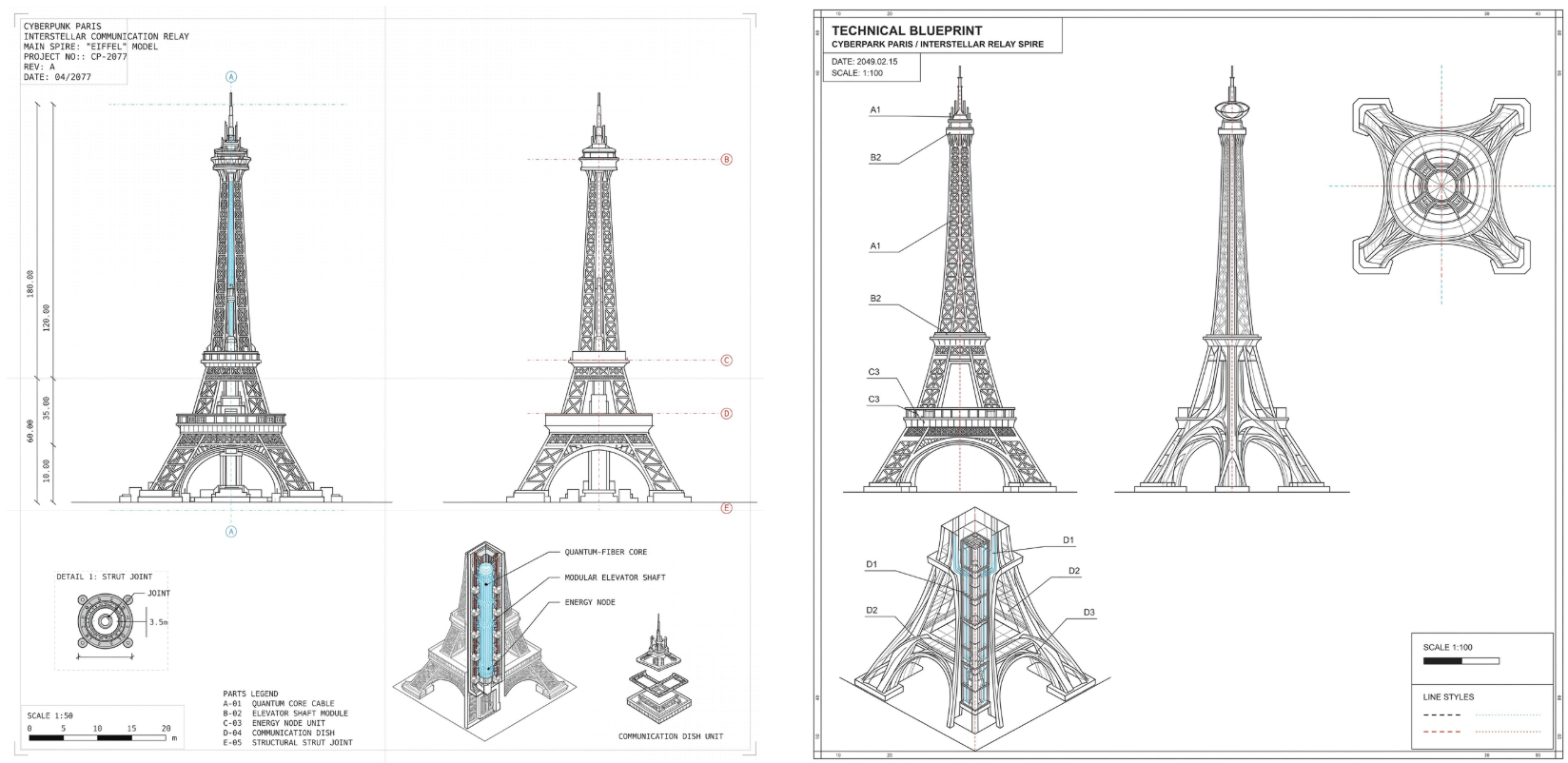
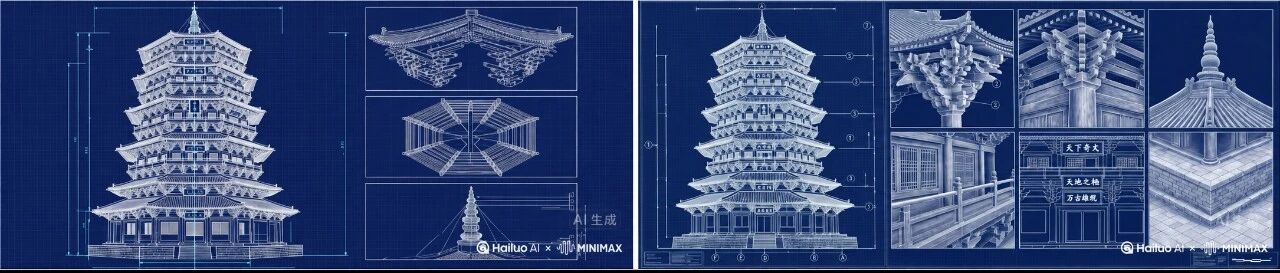
A second request asked for a construction blueprint of the Yingxian Wooden Pagoda. The output shows bracket sets and floor structure as a drawing rather than a painting of a building.
Test two: a robot's view of a collapsed building
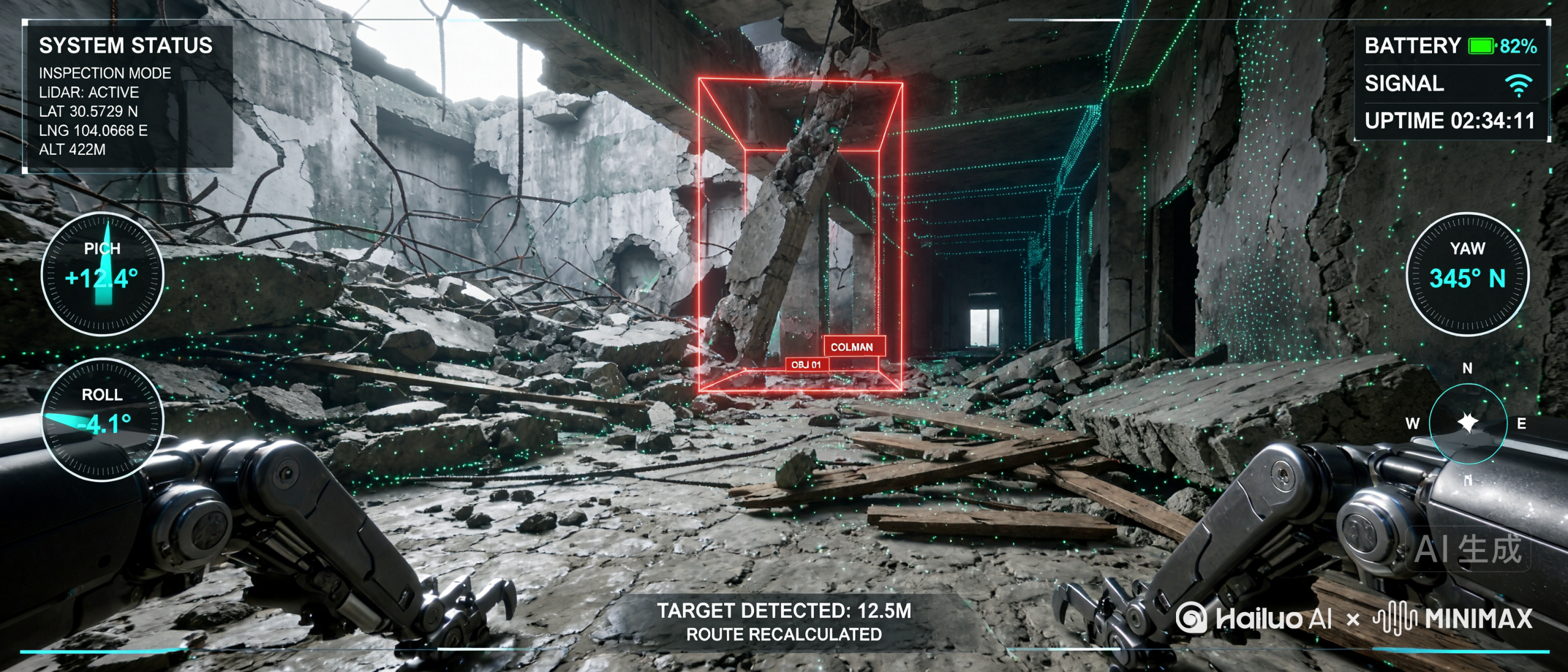
The next prompt described a first-person HUD for a quadruped inspection robot working in earthquake rubble. The frame needed mechanical feet in the foreground, collapsed buildings in the middle distance, a 3D point-cloud grid, a red bounding box tight to a specific concrete beam, and attitude indicators on both sides.
This kind of image usually breaks into stickers. The box lands somewhere near the beam, the grid ignores perspective, and the gauges have no relationship to the robot's pose. In the output shown, the box follows the beam's edges and the indicators match the forward tilt. The model appears to place objects in a 3D scene before drawing them.
Test three: sixteen references without blending them
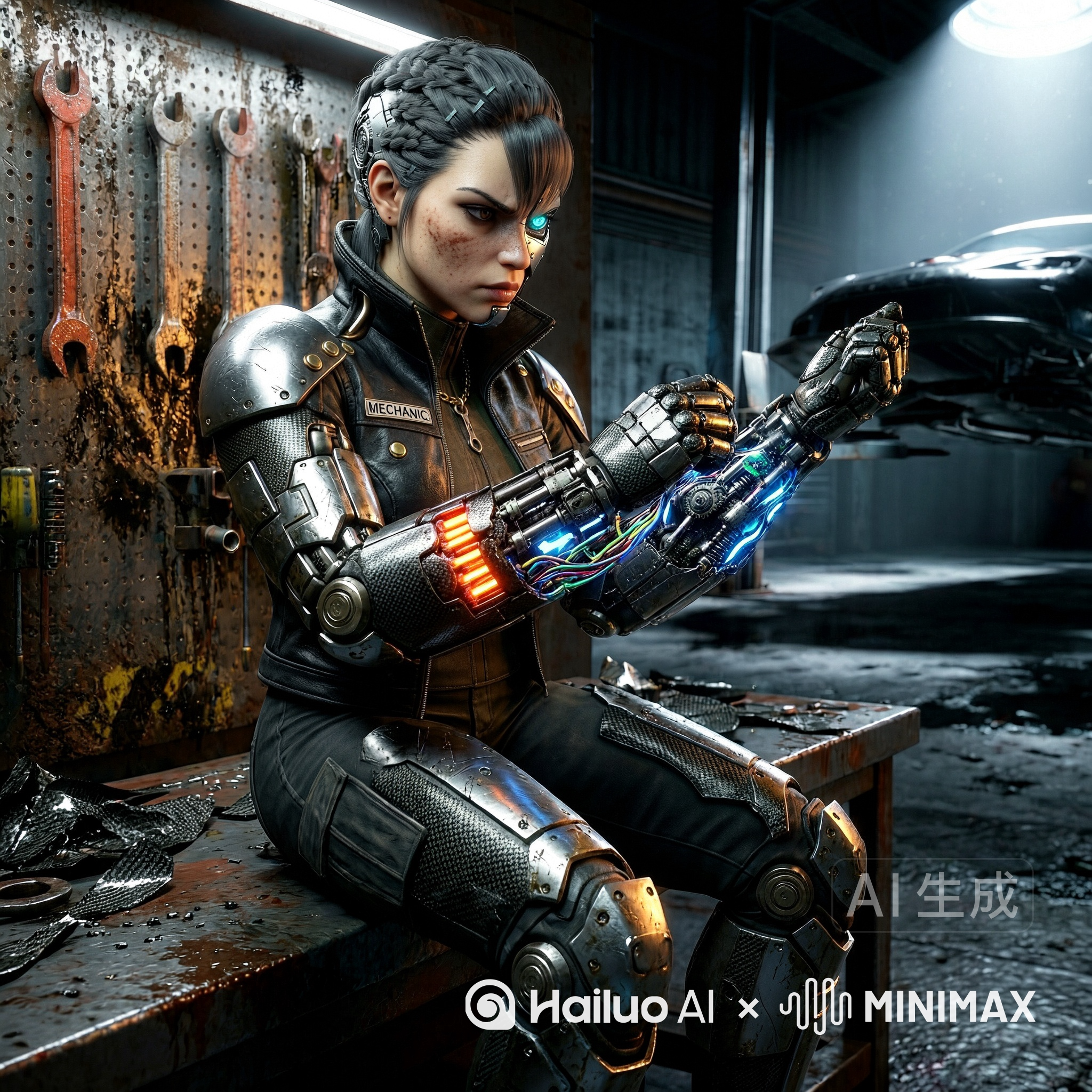
The third test fed the model all 16 reference slots: eight face angles and expressions for an original 3D character, four detail shots of mechanical prosthetics and powered armor, and four lighting and color references from a racing workshop. The prompt was one sentence: the character wears the armor and sits at a workbench in the workshop, adjusting a robotic arm.
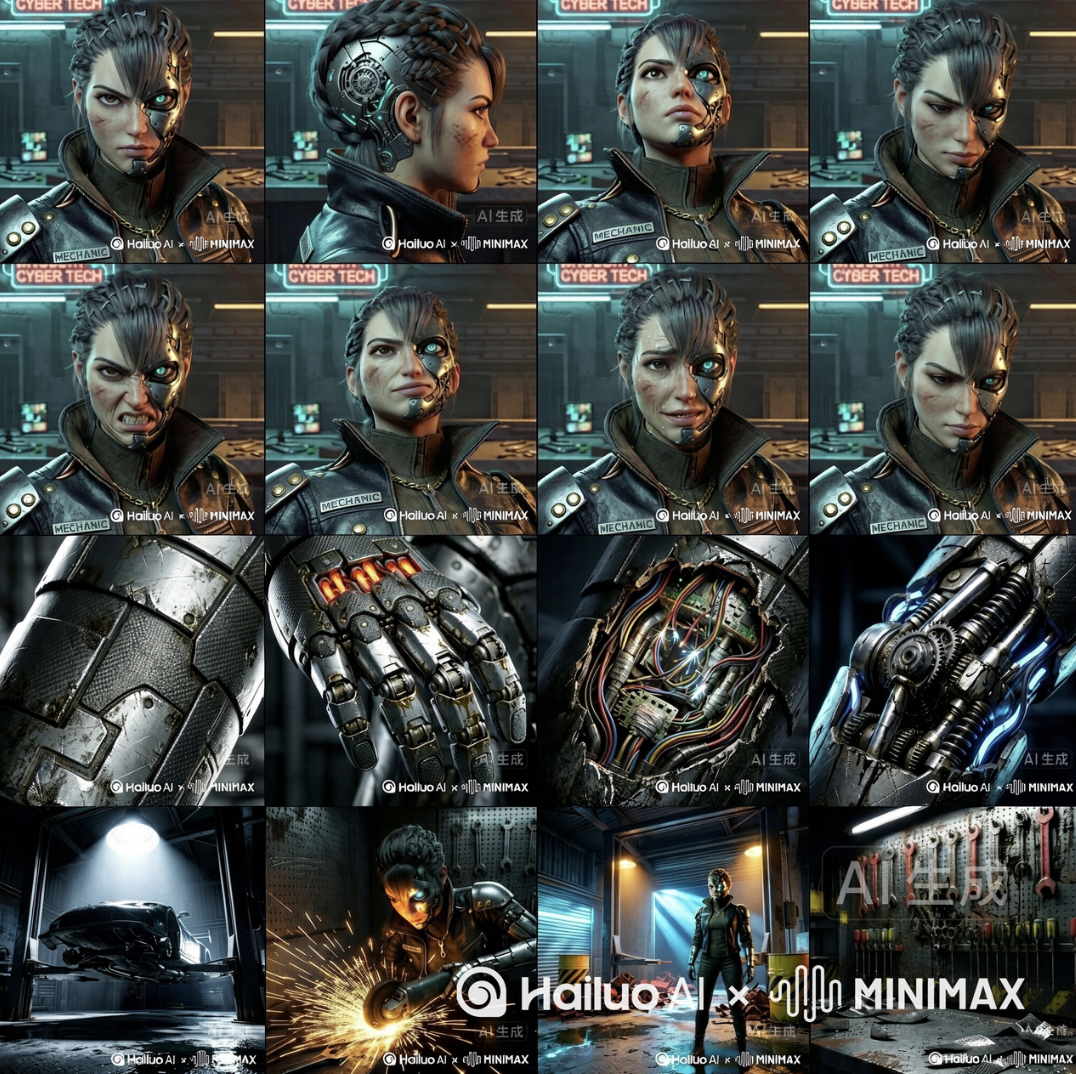
The result kept the face, the armor's joint structure and the workshop's color temperature. What matters is the separation. The model did not average the references into a collage. It read which images described a person, which described equipment and which described a place, then built a new scene from those parts.
Art direction: from dark fantasy to felt
Diagrams are not the whole test. The same release demos include a dark fantasy action game frame with a health orb, a mana bar, five rune cooldowns and a parchment minimap; a black sun over a field of bones; a felt stop-motion scene with fingerprints on the clay base; and a pen-and-watercolor sketch with pigment pooling in rough paper.
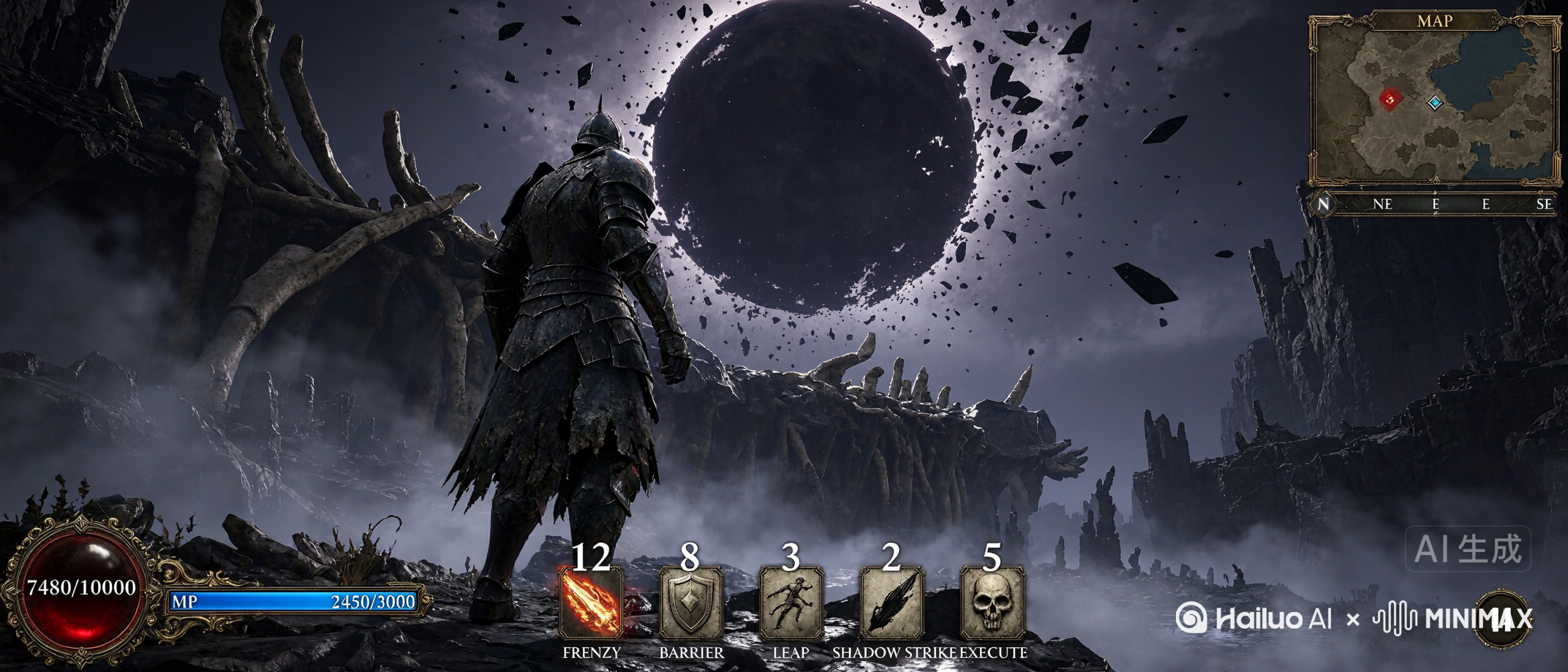
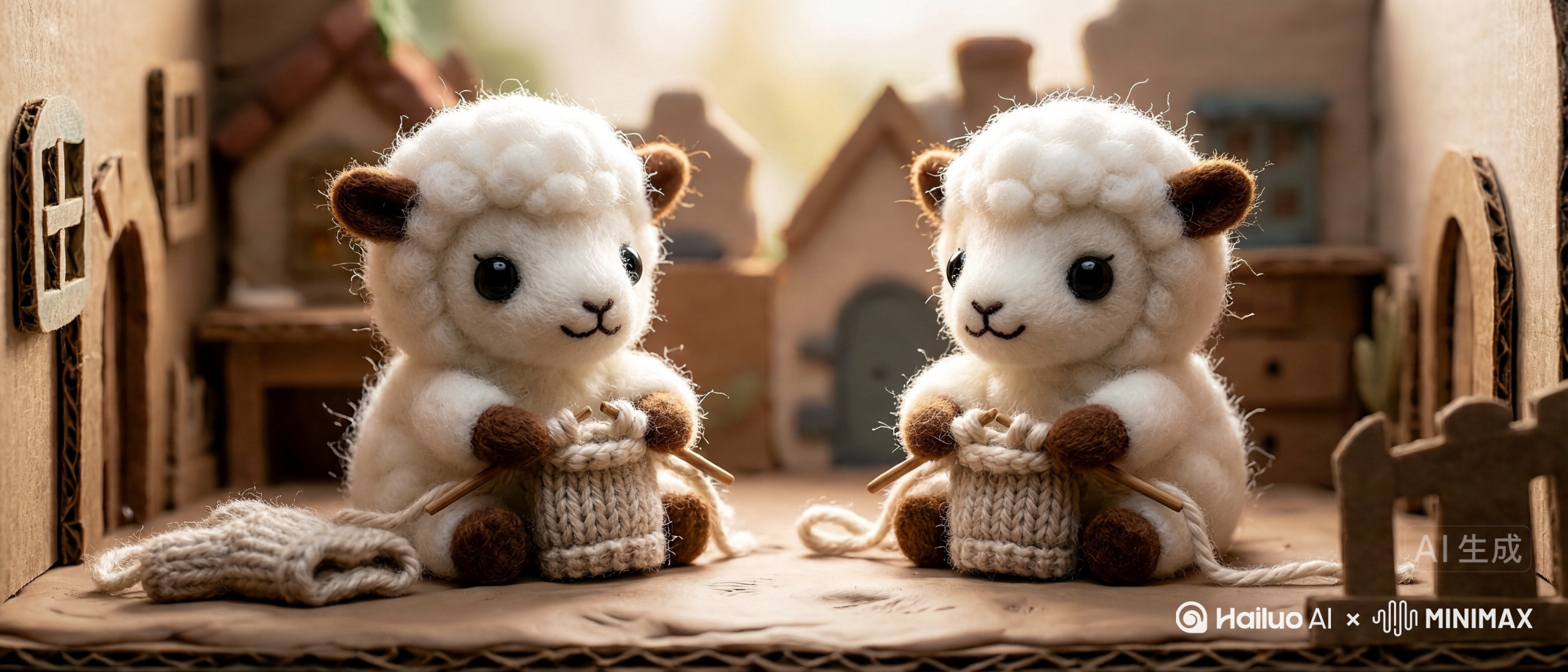
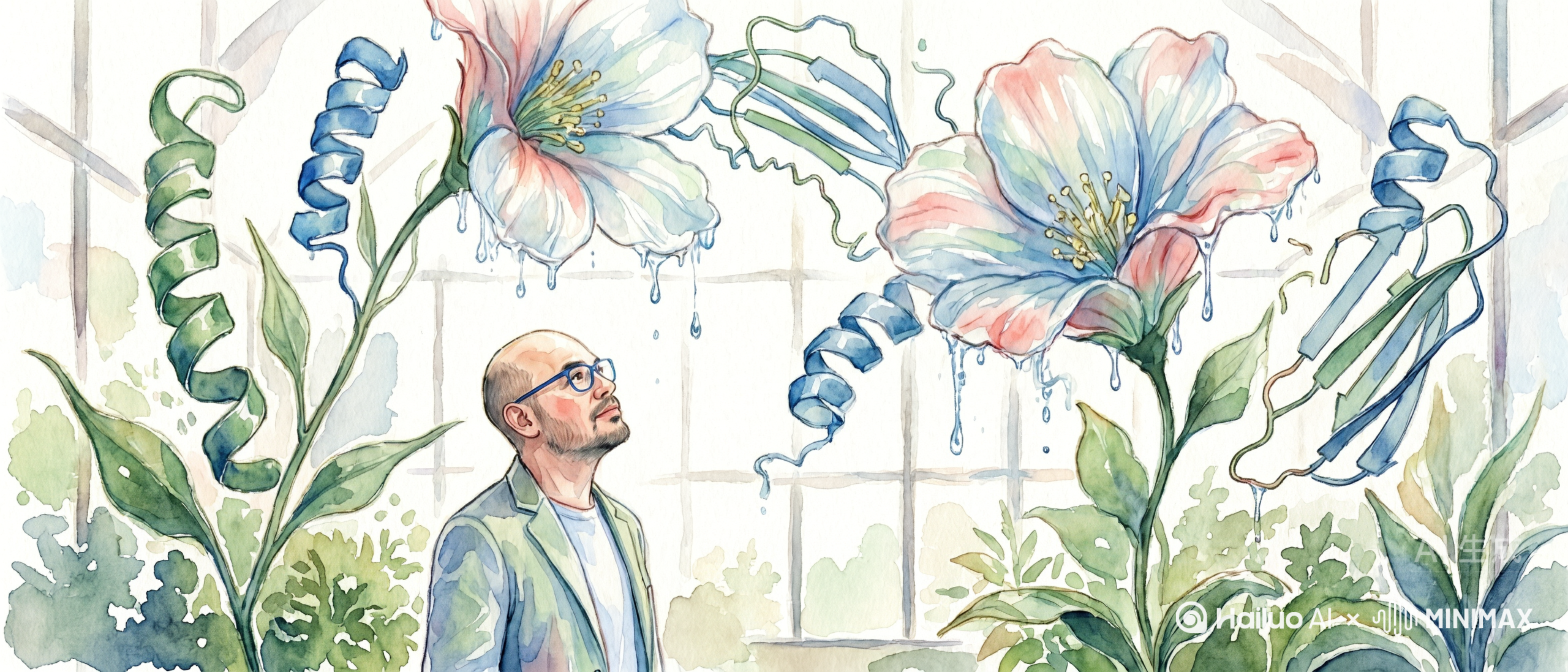
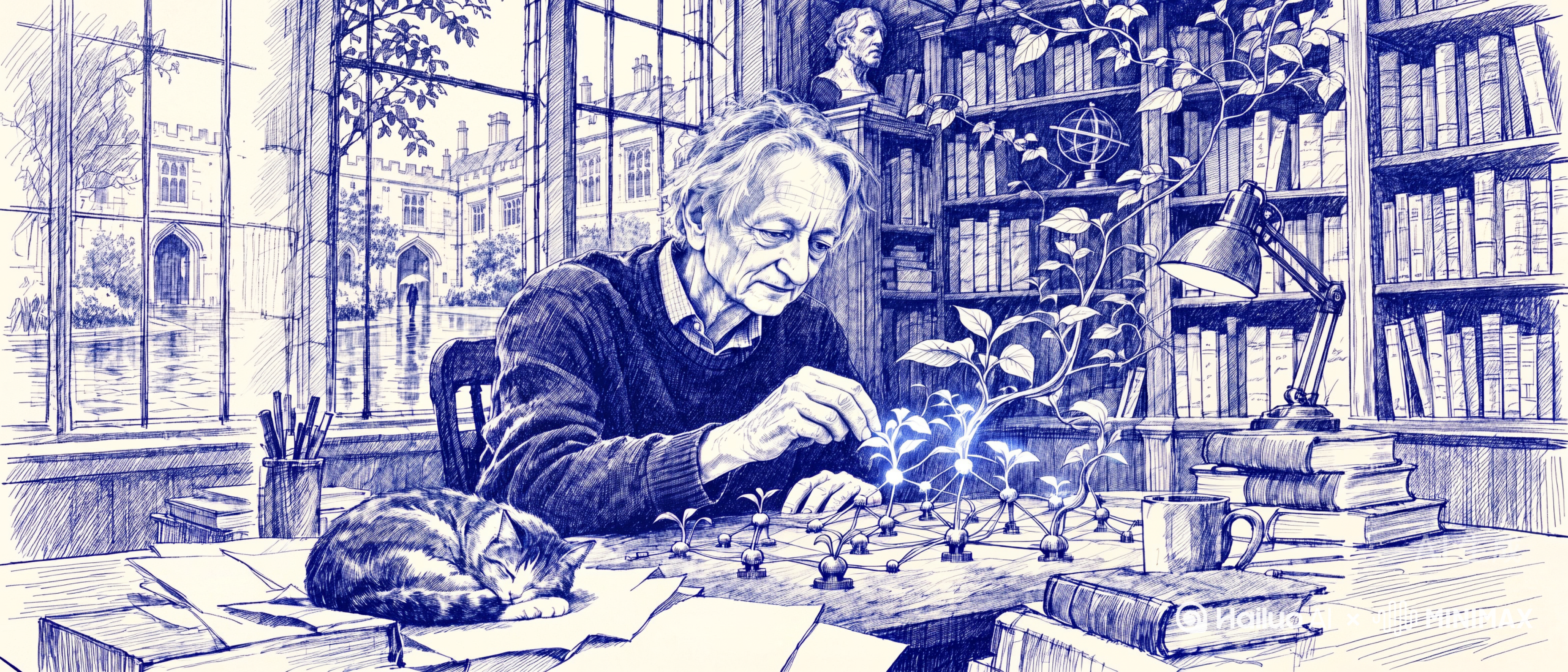
The felt and watercolor tests matter because they show material behavior, not just style words. A model that can render a texture can still fail to show how that texture behaves at an edge, in backlight or under compression.
Engineering drawings and part matching
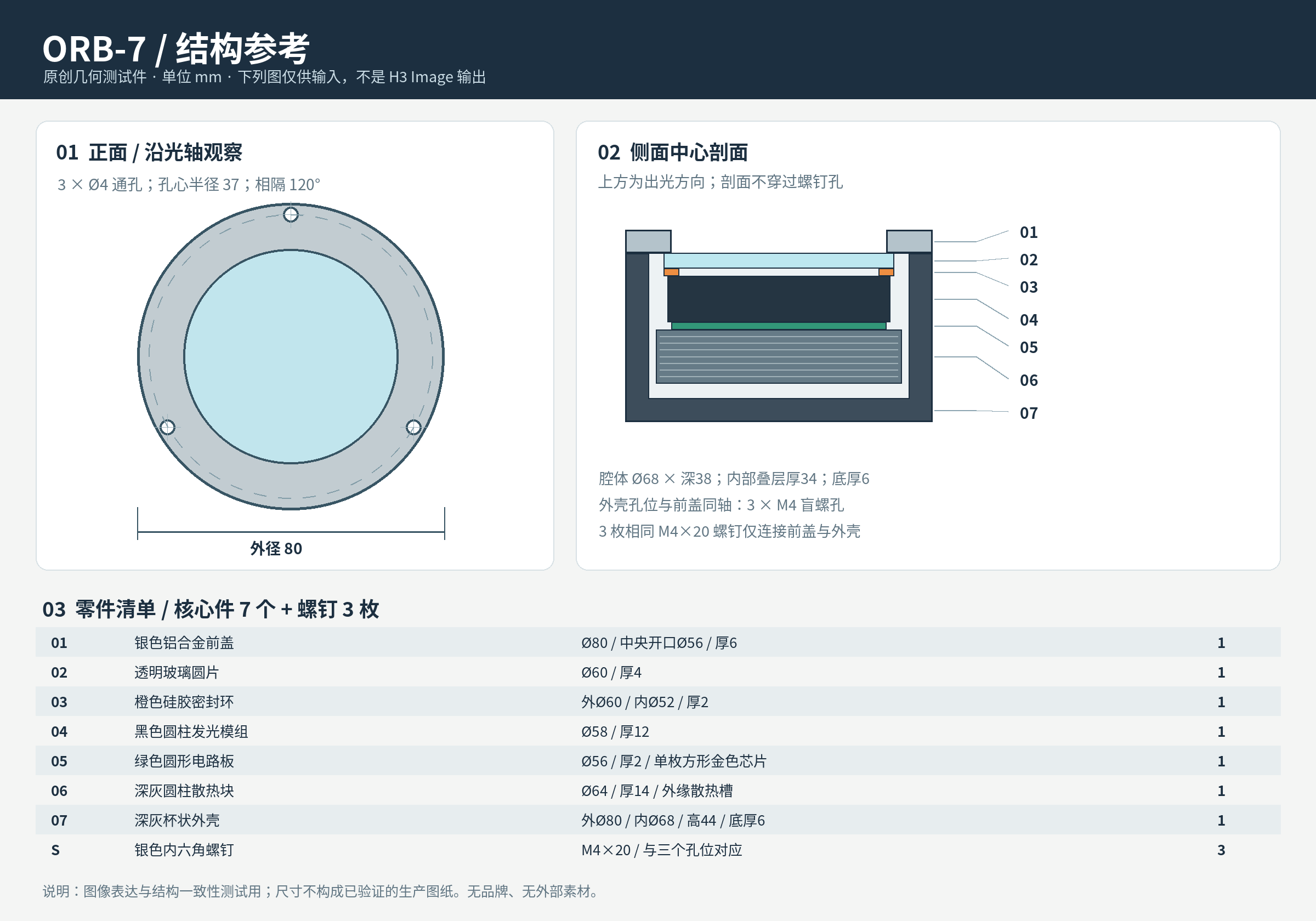
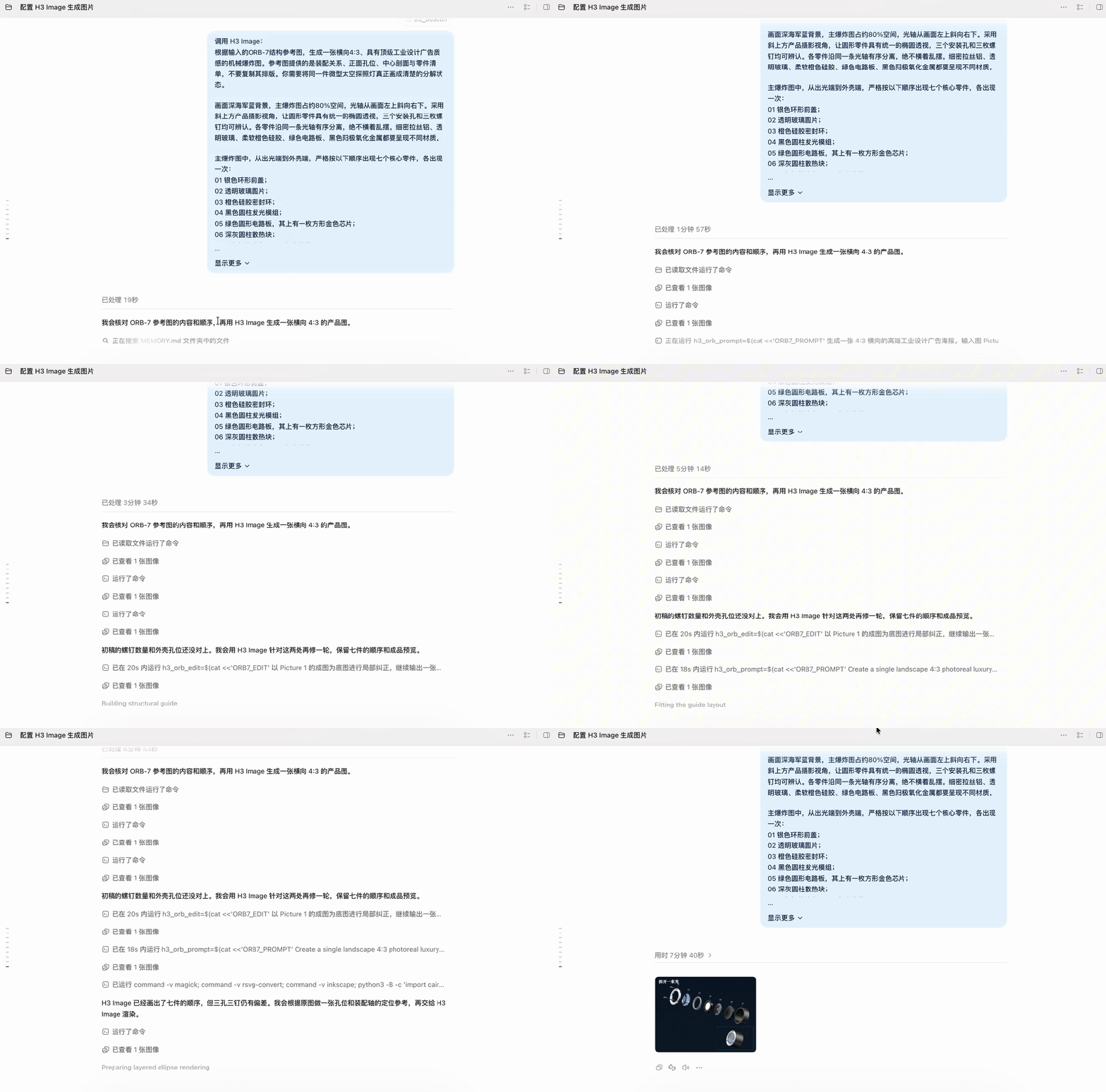
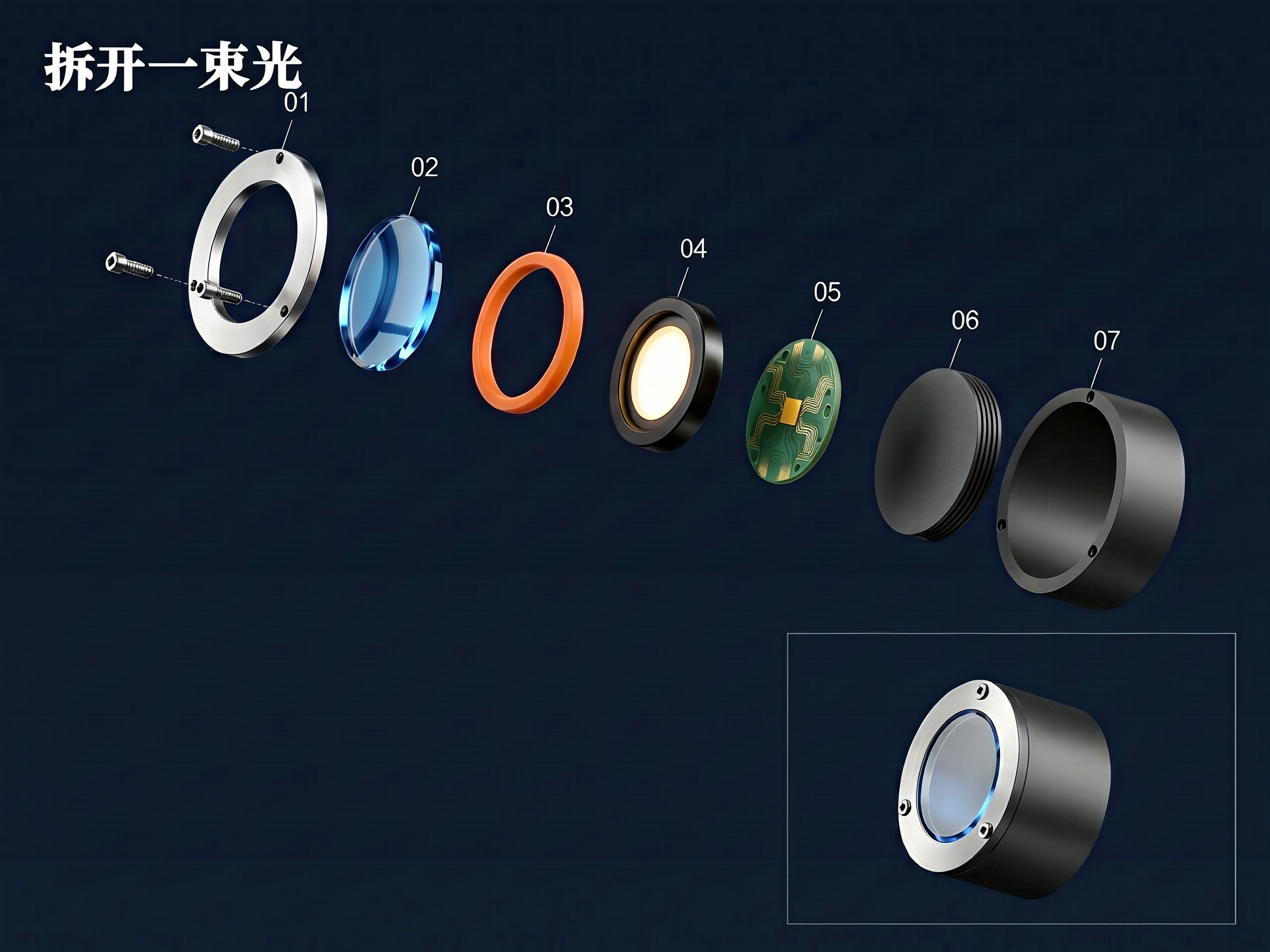
The source report also ran an exploded-view test with a one-page reference sheet for a small flashlight called ORB-7: a front view, a center section and a parts list. The prompt asked for seven parts in order along the optical axis, three screws and numbered callouts. The output followed the list, kept the materials distinct and added a small assembled view in the corner.
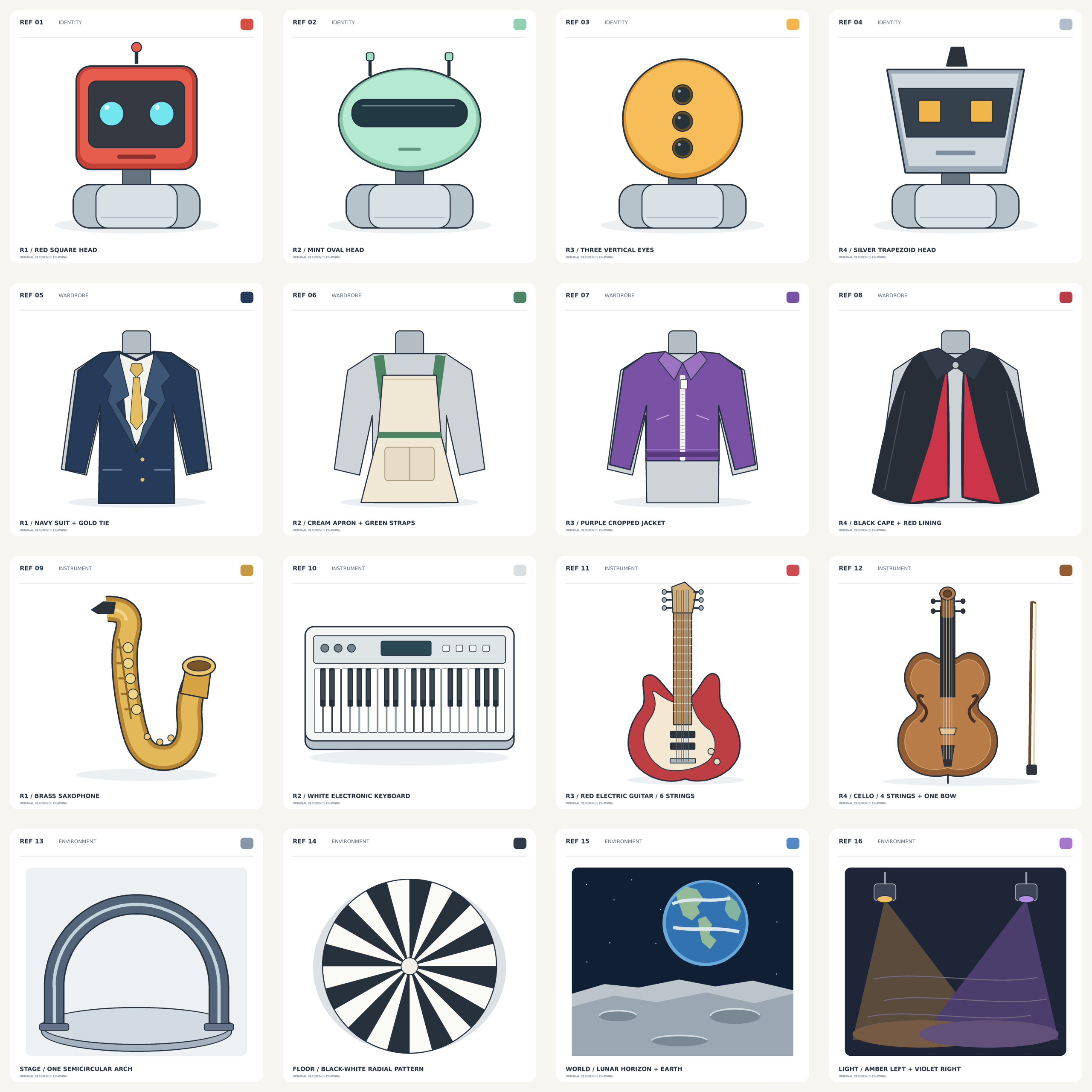
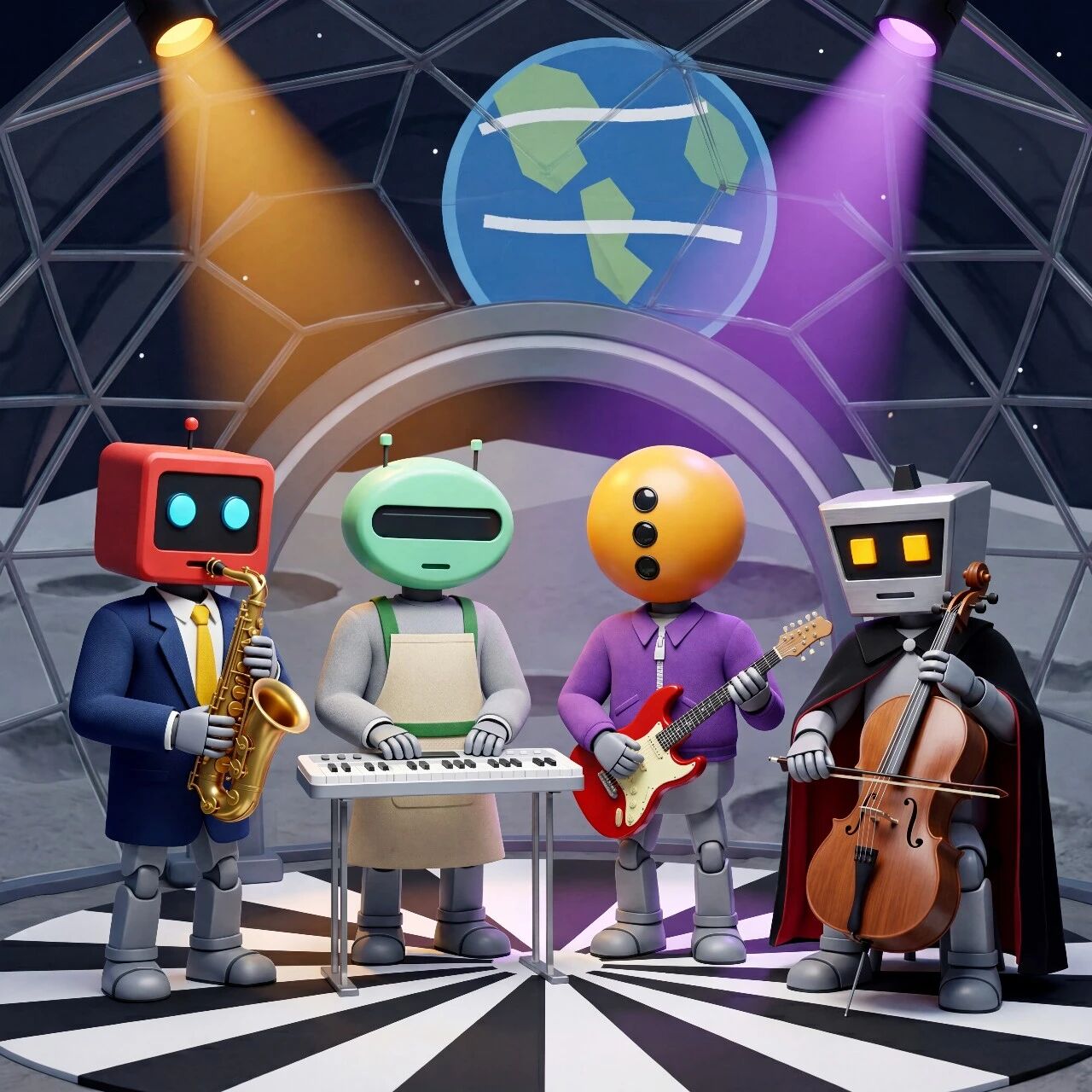
A final matching test used 16 images: four robot heads, four outfits, four instruments and four environment references. The model paired each head with the correct outfit and instrument without mixing the sets. For anyone producing game assets, ecommerce variants or comic panels, that is more useful than a slightly prettier hero image.
How MiniMax built H3 Image
MiniMax's explanation, as reported by Xinzhiyuan, has two stages. The first is H3 itself. H3 was trained as a multimodal model that reads text, images, video and audio in one context, so it learned image structure before it generated video. H3 Image inherits that encoder.
The second stage is post-training. MiniMax used reinforcement learning to push outputs toward better results, distilled the sampler to six steps, added prompt enhancement, and optimized deployment. The separate PE model handles prompt expansion for local users. The API can do the same through H3-Image-Context-IR.
The company said in an August 7 community Q&A that it planned an image model that unified generation and editing. H3 Image is that model: one checkpoint, two endpoints.
What the license actually says
The phrase "open source" is doing a lot of work here. MiniMax released the weights under the MiniMax-H3-Image Community License Agreement, not an OSI-approved license.
Commercial use is free below $1M in annualized revenue. Above that threshold, or if you offer the model as a hosted service, you need prior written permission from MiniMax. The license territory excludes the European Union, the United Kingdom, South Korea and the United States. Commercial products must also display "MiniMax-H3-Image" prominently in the user interface.
The source report describes a $20M threshold for H3, the video model. That figure does not match the H3 Image license we checked on November 11, 2026, which sets the line at $1M. If you are planning a commercial deployment, read the license in the repository rather than the announcement coverage.
The open-weights strategy has worked for MiniMax before. The report says H3 passed 24 million downloads and 300 public derivatives in under a month. fal built H3 Max on it, NVIDIA and MIT researchers released Open-H3-Regenerate-2K on October 28 and updated it on November 9, and Pika released its own variant. MiniMax's slogan for the release is "Intelligence with Everyone." The license is the part that decides who that includes.
How can you try H3 Image?
The weights are on Hugging Face under MiniMaxAI/MiniMax-H3-Image, with the PE model in a separate repository. The API is documented on the MiniMax platform. If you want a hosted option, the report says the model is in MiniMax Code, the MiniMax open platform and Hailuo AI.
Local inference is not a laptop job. The BF16 diffusion transformer is about 68.65 GB and the text encoder is about 66.7 GB. Quantized community builds will probably appear, but plan for data-center hardware if you want the full model.
Two prompting details from the model card are worth knowing before you test it. The model expects detailed English descriptions, and the base checkpoint truncates prompts at 4,096 tokens. If your prompt is short, use the PE model or the API's prompt enhancement. The card also rejects negative prompts, masked edits and transparent backgrounds.
Frequently asked questions
Is MiniMax H3 Image open source?
The weights are public, but the community license restricts revenue, territory and hosted use. It is open weights, not OSI open source.
Can I use H3 Image commercially?
Below $1M in annualized revenue, in the covered territory, with the required UI attribution. Above that, or for a hosted service, ask MiniMax for written permission.
How many reference images does it accept?
Up to 16 for edits. The upload order defines Picture 1 through Picture 16 in the prompt.
Does it really generate 4K?
The API has a 4K area level at 4096 by 4096, and the model card lists sizes up to 6272 by 2688. Best results cluster near 16 megapixels.
Is it better than GPT Image or Nano Banana?
There is no independent benchmark yet. MiniMax calls it the strongest open image model, but the model card has no benchmark table. The public demos show strong instruction following, not a measured win.
If you want to put a generated still into motion, rikoko can turn an image into a short video. The first-video tutorial walks through the upload, the prompt and the export.
English edition based on Xinzhiyuan's November 11, 2026 report, with specifications checked against MiniMax's model card, API documentation and community license.